

[show]
[ hide ]
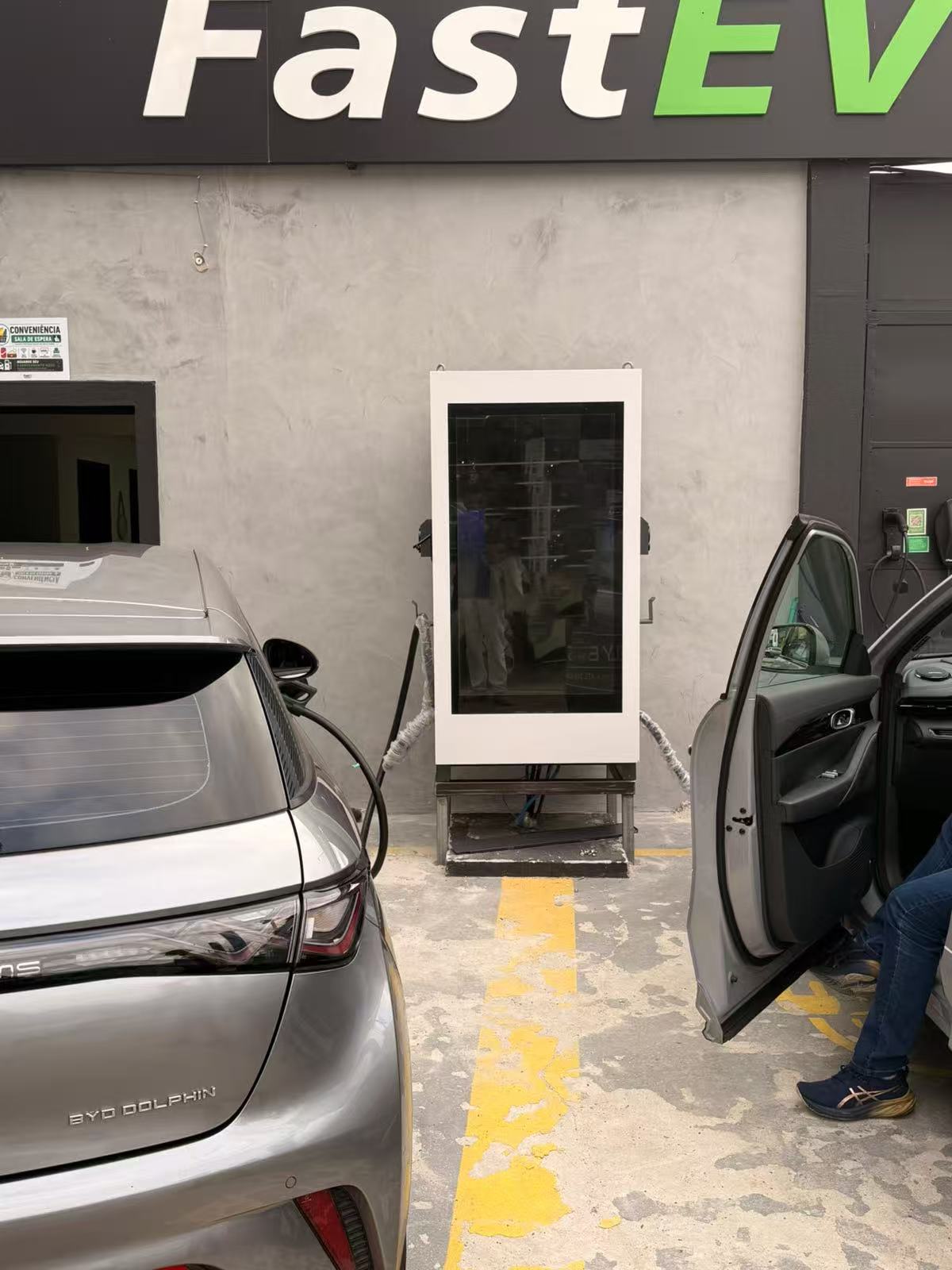
As EV adoption grows, commercial charging sites need to deliver more than electricity. An advertising screen EV charger can turn every charging session into a valuable moment for communication, brand engagement, and potential commercial revenue.
This scenario-based case study shows how a Penoda advertising screen EV charger can support a commercial parking or retail charging location. By combining DC charging capability with a digital display, the solution helps site operators serve EV drivers while creating a more visible and operationally valuable asset.
The site represents a typical commercial charging scenario: EV drivers park, connect their vehicles, and remain on-site while charging. This type of location may include:
Retail stores & convenience services
Parking facilities
Hospitality venues
Mixed-use commercial properties
For charging operators, the challenge is not only to install reliable equipment. They also need to improve site visibility, create a better user experience, and build a sustainable business model beyond charging fees alone.
According to the
, the expansion of electric mobility continues to drive demand for accessible and convenient charging infrastructure. In developing EV markets, charging operators must carefully consider location, investment planning, operational management, and customer attraction. International Energy Agency
Single-Source Revenue: Many charging sites rely mainly on charging fees. In the early stages of EV market development, station utilization can fluctuate, making it important for operators to explore additional sources of value.
Limited Use of Customer Waiting Time: EV drivers usually spend time at the site while charging. If the charger only displays basic status information, this attention window is underused.
Low Site Visibility: A standard charger may function well but still be easy to overlook. Commercial sites need equipment that supports charging while improving the overall visual presence of the location.
A Penoda advertising screen EV charger integrates EV charging and digital content display into one unit. It enables operators to provide charging services while using the screen as a customer communication and on-site media channel.
Essential Operations: Charging status, payment guidance, and safety instructions
Service Updates: Estimated charging progress and service notifications
Local Promotions: Nearby retail promotions, restaurant offers, and store discounts
Brand Media: Brand campaigns and partner advertising placements
Customer Loyalty: Membership programs, QR codes, and customer service details
Localization: Portuguese-language content for Brazilian users or multilingual content for international locations
This creates a more engaging experience for drivers and gives site owners a flexible tool for operating the charging location.
The digital screen communicates with users at the moment they are most likely to pay attention: when they start charging, check the progress, or wait for their vehicle.
Clear charging information should always come first. Additional content can then provide practical value, such as nearby services, store promotions, membership benefits, or local offers.
For shopping centers, convenience stores, restaurants, hotels, and parking operators, an advertising screen EV charger can help connect charging traffic with on-site consumption.
Example: A driver charging an EV can receive a promotion for a nearby café, a discount for in-store purchases, or information about parking and membership services. This creates a stronger connection between EV charging and the wider customer journey.
The display can potentially support a wider commercial model, including:
Self-promotion for the site owner
Campaigns for local retail partners
Advertising placements for automotive, finance, insurance, or lifestyle brands
Time-based promotions during off-peak charging periods
Co-branded campaigns with commercial tenants
Note: Actual advertising income will depend on traffic volume, screen management, local partnerships, and the operator’s commercial strategy. However, the screen gives the operator an additional asset to develop over time.
A successful advertising screen charger should balance essential charging information with commercial content.
┌─────────────────────────────────────────────────────────┐
│                 1. AT START OF CHARGING                 │
│  Payment instructions • Price info • Safety guidance    │
└────────────────────────────┬────────────────────────────┘
                             │
                             ▼
┌─────────────────────────────────────────────────────────┐
│                   2. DURING CHARGING                    │
│   Merchant promotions • Loyalty benefits • Brand ads    │
└────────────────────────────┬────────────────────────────┘
                             │
                             ▼
┌─────────────────────────────────────────────────────────┐
│                3. AT CHARGING COMPLETION                │
│    Completion notice • Next-visit discount • Feedback   │
└─────────────────────────────────────────────────────────┘
An advertising screen EV charger is especially suitable for locations where drivers have a meaningful dwell time, including:
Commercial parking lots
Convenience retail locations
Shopping centers
Hotels and resorts
Office parks
Fleet depots
Transport hubs
Mixed-use developments
At these locations, the charger is no longer only an energy device. It becomes a visible customer touchpoint that can support charging, communication, branding, and local business activity.
Before deploying advertising screen EV chargers, operators should consider the following five steps:
Choose the Right Location: Prioritize sites with EV traffic, parking dwell time, and nearby services that can benefit from customer engagement.
Keep Charging Information Clear: Charging status, pricing, safety information, and payment instructions should remain easy to understand at all times.
Localize the Content: For Brazil, Portuguese-language content and locally relevant promotions can improve user connection and campaign effectiveness.
Plan for Ongoing Operations: A screen delivers the greatest value when content is regularly updated and aligned with site operations, seasonal promotions, and partner campaigns.
Match the Charger Configuration to the Project: Charging power, connector standards, payment methods, network connection, and screen functionality should be selected according to the site’s real operating requirements.
The EV charging market is creating new opportunities for commercial property owners and charging operators. But long-term success depends on more than selling electricity. Operators need reliable charging equipment, a strong user experience, and flexible ways to create value at every site.
With an integrated advertising display, a Penoda advertising screen EV charger can help transform a charging station into a more visible, engaging, and commercially valuable destination.
Have Questions Or Want To Partner With Us?
Reach Out.
Company Address: MAX Technology Park, Chengyang District, Qingdao, Shandong, China


