

[show]
[ hide ]
A dc ev charger for a fleet depot should be selected around the next departure, not simply the largest power rating available. Operators need to know how much energy each vehicle requires, when it returns and when it must leave again. These details turn a product enquiry into an operational specification.
This dc ev charger application review uses a proposed UK van-depot scenario to explain that process. It combines a recent British electrification story with practical procurement guidance for discussions with Penoda. The depot, operating assumptions and calculations are illustrative; no completed Penoda installation or measured fleet results are claimed.
On 21 October 2026, the UK Environment Agency reported an electric-vehicle trial on Sussex coastal defence works. The work took place from 12 to 16 October, and the team collected information on productivity, reliability, battery performance, energy consumption, charging requirements and operator experience.
That project involved construction equipment and vehicles, rather than the van depot considered here. Its relevance is the evaluation method: charging needs belong in an assessment of the complete working day. The published account does not identify Penoda as a supplier or establish compatibility between Penoda chargers and the machinery used.
The proposed application is an existing depot preparing to introduce battery-electric delivery vans. Some vehicles remain parked overnight, while others return late or need an additional trip. The operator wants to understand where DC charging adds value before agreeing an equipment schedule.
A useful starting concept is a planned charging arrangement for routine replenishment, together with a separately evaluated DC option for shorter turnaround periods. Equipment quantity and rated power remain open until the vehicle schedule and electrical survey have been reviewed.
The customer in this scenario is a hypothetical UK delivery-fleet operator. Its charging priorities differ from those of a public roadside site: departures are scheduled, access can be restricted and a delayed vehicle may affect the delivery plan.
The operator should provide records covering demanding days as well as normal operation. Late returns, unexpected routes and vehicles parked away from their assigned bays can change the charging opportunity. Planning only around an average day may hide the sessions that require faster charging or an alternative operating arrangement.
For each vehicle group, record the return time, next departure, expected energy deficit and usable charging window. Record connector and DC charging capability against the actual vehicle specification. Battery capacity alone does not determine how quickly a vehicle can accept energy.
The IEA’s Global EV Outlook 2026 charging analysis, published within the report released on 20 May 2026, discusses integrated depot planning for buses and trucks. It connects routes, batteries, charging strategies and charger numbers. Applying that planning principle to this van scenario is an editorial recommendation, rather than a claim that the report evaluated this proposed site.
Routine charging covers predictable daily replenishment. Recovery charging addresses exceptions such as a late return or an extra assignment. Both need a defined energy target, but they may justify different equipment.
The following examples use the same hypothetical 24kWh battery-energy requirement. The calculated average is energy divided by available time, before allowing for real-world limitations.
Illustrative charging window | Required battery energy | Calculated average battery-side power |
Eight hours | 24kWh | 3kW |
Two hours | 24kWh | 12kW |
Forty-five minutes | 24kWh | 32kW |
These are planning calculations, not charger recommendations or promised charging times. Vehicle limits, temperature, tapering, connection delays and available power affect delivery. Grid-side demand also includes losses. The examples show why the shortest important window can influence specification more strongly than the daily energy total.
A DC fast charger deserves evaluation when the operational window cannot comfortably accommodate the required energy using the alternative arrangement. Higher rated output is useful only when the vehicle and site can support it.
Compare the vehicle’s charging capability across the expected battery state-of-charge range with the proposed equipment. A connector that physically fits does not by itself demonstrate the required charging performance. Request a representative test involving the vehicle variant, charger configuration and operating conditions relevant to the depot.
Avoid treating a series power range as a single unit’s adjustable capability. The quotation should identify the exact rated model, connector, cable arrangement and any output-sharing behaviour. Those details determine what one vehicle receives when other sessions are active.
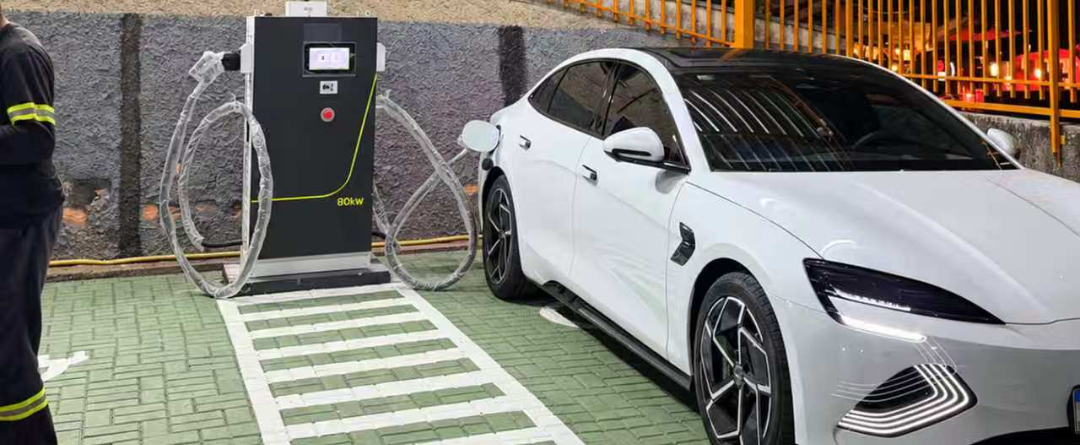
Buyers can review Penoda’s PDB DC EV charger series as a starting point for equipment discussions. Its page is headed PDB-60/80/120/160kW, while several detailed sections specifically describe 60kW and 80kW versions. Obtain the current datasheet for the proposed model before applying specifications across the range.
For a commercial EV charger, the procurement discussion should connect each reference to a decision:
Product-page reference | Question for the proposed order |
Multiple PDB power models | Which model meets the vehicle’s turnaround requirement? |
OCPP 1.6 JSON | Which required functions have been tested with the chosen backend? |
Connector options | Which exact interface and cable configuration will be supplied? |
IP55 and IK10 references | Is the selected enclosure suitable for the assessed environment? |
CE reference | Which model-specific documentation is available for destination review? |
These are published product references, not confirmation of the configuration required for this UK application.
Commission a qualified local electrical assessment before finalising the equipment order. It should address the supply, protection, earthing, cable routes and available installation space. Layout matters operationally: drivers must reach the correct bay, connect safely and leave without blocking other vehicles.
Coordinate charger delivery with civil works, electrical installation, communications and vehicle arrival. Identify who supplies accessories, who completes the backend setup and who signs off commissioning. A depot can receive its hardware on schedule and still be unable to charge if another part of the installation remains incomplete.
Agree production and shipping milestones against the approved configuration. Confirm inspection requirements, delivery responsibilities and the documentation needed by the installer. Customisation and unresolved engineering questions should be included when establishing the schedule.
Acceptance of an EV charging station should include the depot’s intended operating workflow. Test vehicle identification, authorisation, charging initiation, session records and fault reporting with the chosen management system. OCPP support alone does not demonstrate route scheduling or priority charging.
Run representative charging windows and check whether the required energy is delivered before departure. Include an exception scenario, such as a late vehicle, and define who receives the alert when a session fails. Test the agreed response to communications loss and a charger becoming unavailable.
Retain the test records, settings and firmware versions. This establishes what was accepted and helps the operator investigate later differences in performance.
The intended outcome is that vehicles receive the energy needed for their assigned work within the available windows. No improvement percentages, uptime guarantees or financial returns are claimed for this proposed depot.
During a pilot, track departure readiness alongside successful session starts, delivered energy and interruptions. Investigate why a vehicle misses its target: insufficient parking time, a missed connection, a vehicle charging limit and an equipment fault require different remedies.
An overnight completion rate can hide daytime problems. Separate routine and recovery sessions in reporting so the operator can see whether the proposed DC provision addresses the exceptions it was purchased to handle.
A departure-based specification helps buyers compare proposals against a shared operational target. It also helps explain when a faster charger adds useful capability and when a different parking or charging procedure may solve the issue.
Ask each EV charger supplier to identify assumptions about vehicle acceptance, session overlap and staff actions. Compare equipment, installation, integration and continuing service costs on the same basis. A lower equipment price is difficult to evaluate if one offer excludes work required to make the depot operational.
Reliability assessment should cover the proposed equipment and the support arrangement around it. Request relevant test documentation, maintenance requirements and a clear route for diagnosing faults. Agree responsibilities for remote investigation, local attendance and replacement parts.
Customisation should support the operator’s workflow. Branding, interface language or other requested changes need written confirmation of scope and feasibility. Do not assume that OEM/ODM services include integration with a dispatch system; define that work separately if it is required.
Confirm warranty conditions, support coverage and delivery commitments in the commercial documents. A published certification reference or general service statement should be checked against the selected model and destination requirements.
No. Long, predictable parking periods may allow another charging arrangement to meet the energy requirement. DC charging is worth assessing where shorter windows or operational exceptions create a need that the alternative cannot adequately address.
Not automatically. Compare the energy target and available time with realistic vehicle charging behaviour. The maximum figure may apply only during part of a session, and the depot’s available power may impose another limit.
It should show that representative vehicles can complete the agreed workflow and receive the required energy before their deadlines. Include demanding operating conditions and a documented response to failed or interrupted charging.
Provide the country, vehicle variants, connector requirements, energy targets, return and departure windows, proposed quantity and supply information. Add backend preferences, site drawings and customisation needs. Identify unknowns so the proposal can state its assumptions clearly.
Penoda, operated by Qingdao Penoda Electrical Co., Ltd., supplies AC and DC charging equipment. Its company information describes OEM/ODM services for international customers. A published overseas reference includes its 40kW project in Goiânia, Brazil, supported by a local distributor and project partner; it is not presented here as a UK fleet-depot reference.
Visit Penoda’s brand website and its official charging station website. Discuss the EV charging solution, configuration, destination documentation and support responsibilities against the requirements of your own project.
Planning a dc ev charger application for a UK fleet depot? Contact Penoda for a configuration review and quotation. Share your vehicles’ energy requirements, charging windows, interfaces and site supply information. Request the proposed model, current datasheet, relevant conformity documents and an itemised scope covering delivery, integration and support.
Have Questions Or Want To Partner With Us?
Reach Out.
Company Address: MAX Technology Park, Chengyang District, Qingdao, Shandong, China


