

[show]
[ hide ]
DC Fast Charging (often referred to as Level 3 charging) is currently the quickest way to power an electric vehicle.
The fundamental difference lies in where the power conversion happens:
AC Charging: Power from the grid enters the vehicle's On-board Charger, which converts AC to DC to store in the battery. Due to space and heat constraints inside the car, this conversion is usually limited to lower power (typically 7kW to 22kW).
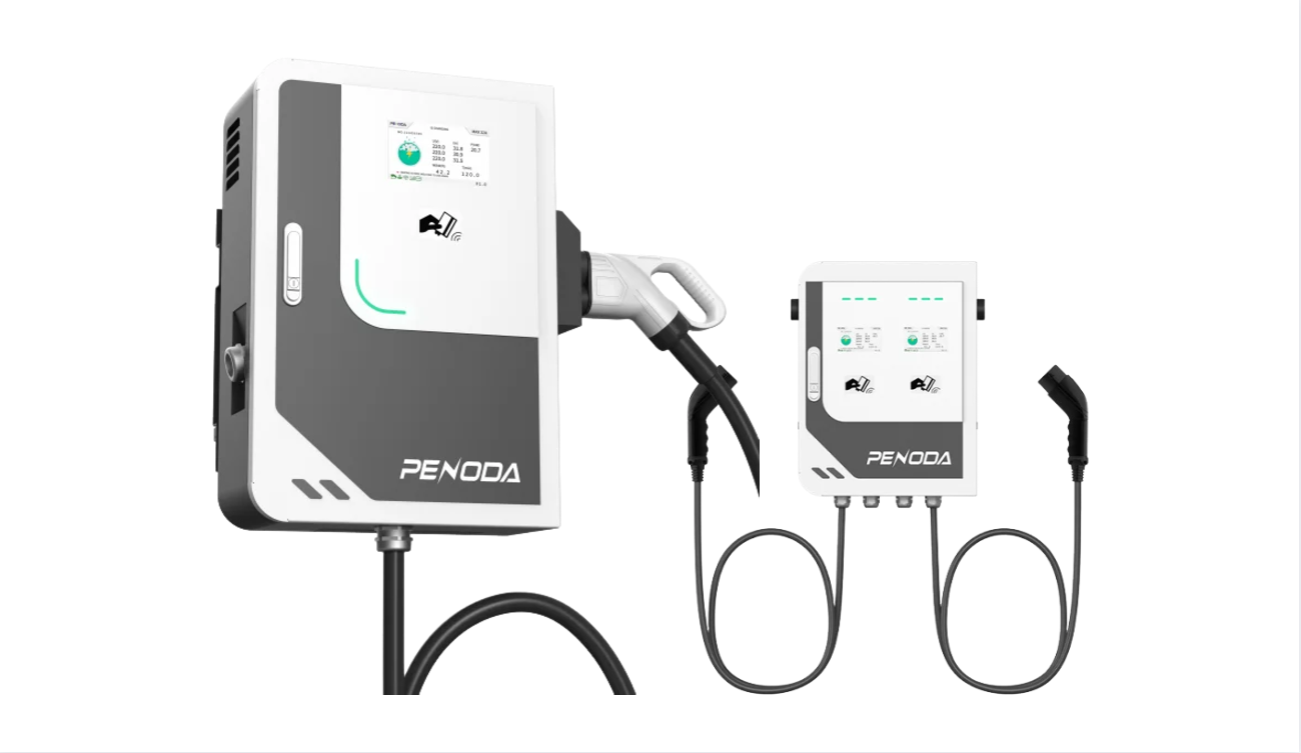
DC Charging: The conversion happens inside the charging station itself. These stations house powerful converters that turn AC grid power into high-voltage DC power, bypassing the on-board charger and feeding energy directly into the battery.
| Feature | AC Charging | DC Fast Charging |
| Conversion Location | Inside the vehicle (On-board) | Inside the charging station |
| Power Output | 20kW – 240kW+ (e.g., Penoda PDB Series) | |
| Charging Speed | Slow (6–12 hours for a full charge) | Rapid (30–60 minutes to 80%) |
| Primary Use Case | Residential, workplace, hotels | Highway stops, commercial fleets, hubs |
| Investment Cost | Lower initial cost, simple install | Higher cost, requires specialized power infrastructure |
When selecting charging equipment, it’s not just about speed—it’s about matching the right technology to your Return on Investment (ROI) and operational goals.
Long Dwell Times: Ideal for locations where vehicles stay parked for 4+ hours, such as employee parking lots,
Limited Grid Capacity: If your site has a restricted power quota, installing multiple low-power AC units allows you to cover more parking spots.
Budget-Sensitive Projects: AC chargers offer a much lower entry cost and minimal maintenance.
Commercial Monetization: For public charging stations, turnover is key. DC Fast Charging allows customers to refuel in the time it takes to grab a coffee.
Logistics & Commercial Fleets: For heavy-duty trucks, buses, or delivery vans that need to recover range during shift breaks (utilizing high-power units like
Highway & Main Arteries: Providing "emergency" or en-route charging to eliminate range anxiety for long-distance drivers.
At Penoda (penodaev.com), we provide a full spectrum of charging infrastructure designed for industrial reliability. Whether you need a sleek 21kW AC unit for a residential project or a 240kW split-type DC system for a bus depot, our products offer:
Smart Compatibility: Fully compliant with OCPP 1.6J and 2.0.1 protocols for seamless backend integration.
Modular Design: Our DC chargers (such as the PDB Series) feature modular power designs, making future power upgrades and maintenance effortless.
Industrial Durability: Certified for extreme environments, ensuring stable performance across global markets.
While AC charging is perfect for "park-and-charge" scenarios, DC Fast Charging serves as the "gas station" of the modern electric era.
Have Questions Or Want To Partner With Us?
Reach Out.
Company Address: MAX Technology Park, Chengyang District, Qingdao, Shandong, China


